Unfinished Notes from Chili
As we began our descent into Santiago, I fell into conversation with my seatmate—a Santiago local who had relocated to Montreal—about the brutality of Canadian winters and the differences in our societies, so deeply engrossed that I nearly missed the crimson-lit triangular peaks emerging in the fuselage windows at dawn. I perhaps would have tried to peer more closely at the mountain chains, but wedged in the middle seat of the middle row, I quickly surrendered any attempt to discern what lay beyond the glass.
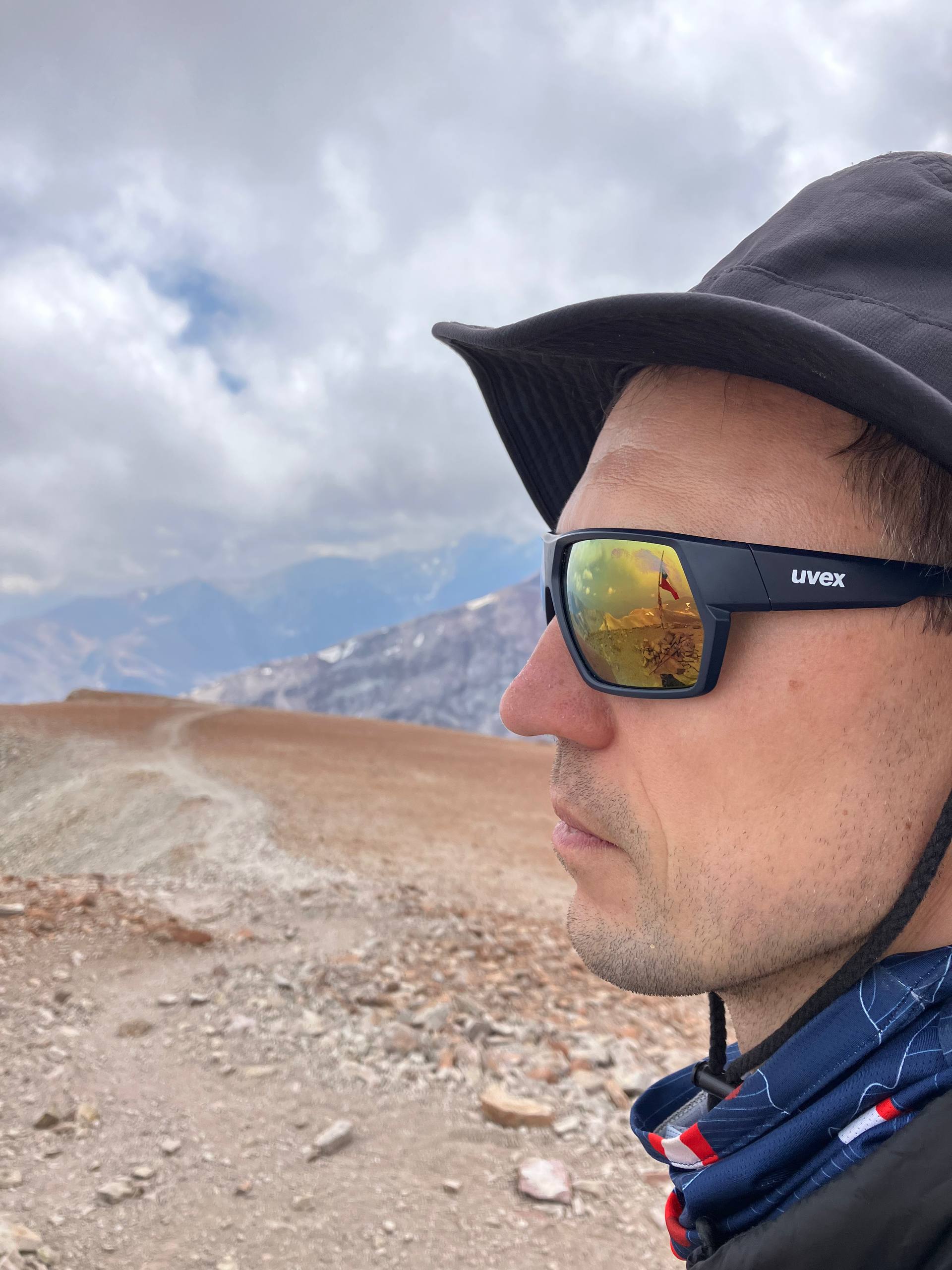
I watched my father finish his final thirty-second breather and begin his upward push. He had perhaps five vertical meters left to the flag and the sign reading “Cerro Pinto - 4180 m.” I watched him and beamed, laughing, panting, and coughing, involuntarily contorting every muscle in my face as I threw my arms—free of poles and pack—up toward the sky. “We made it!”
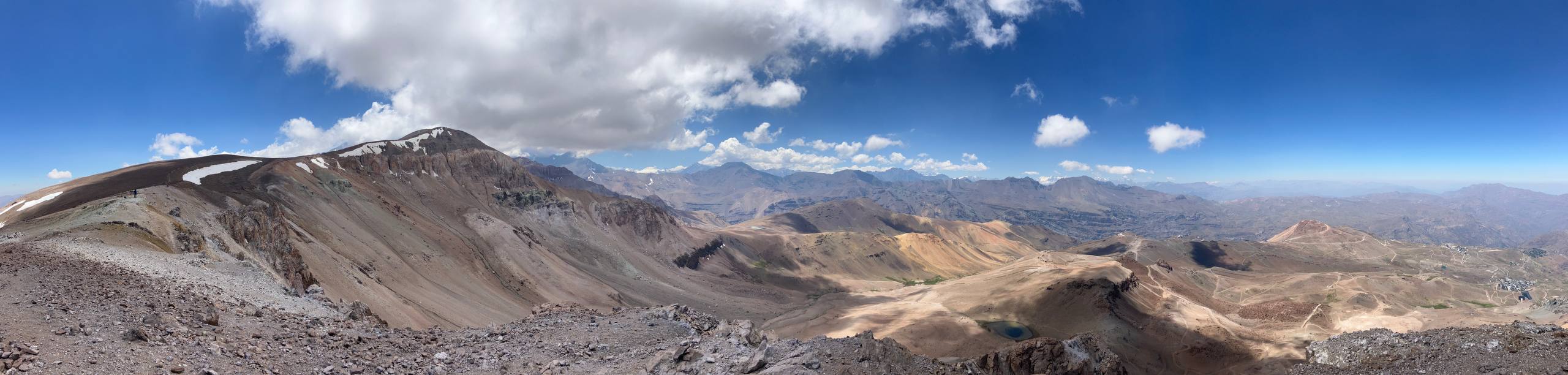
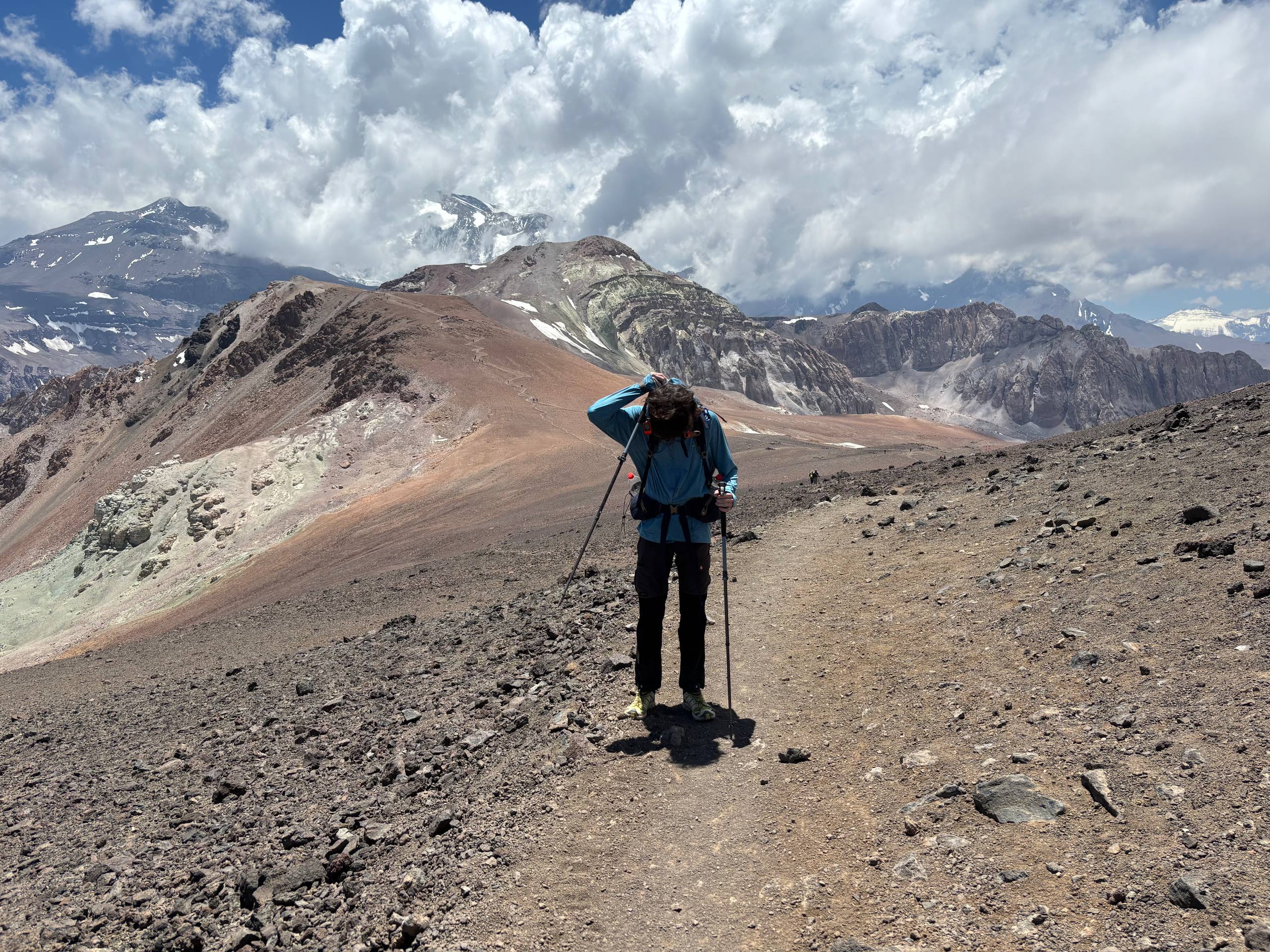
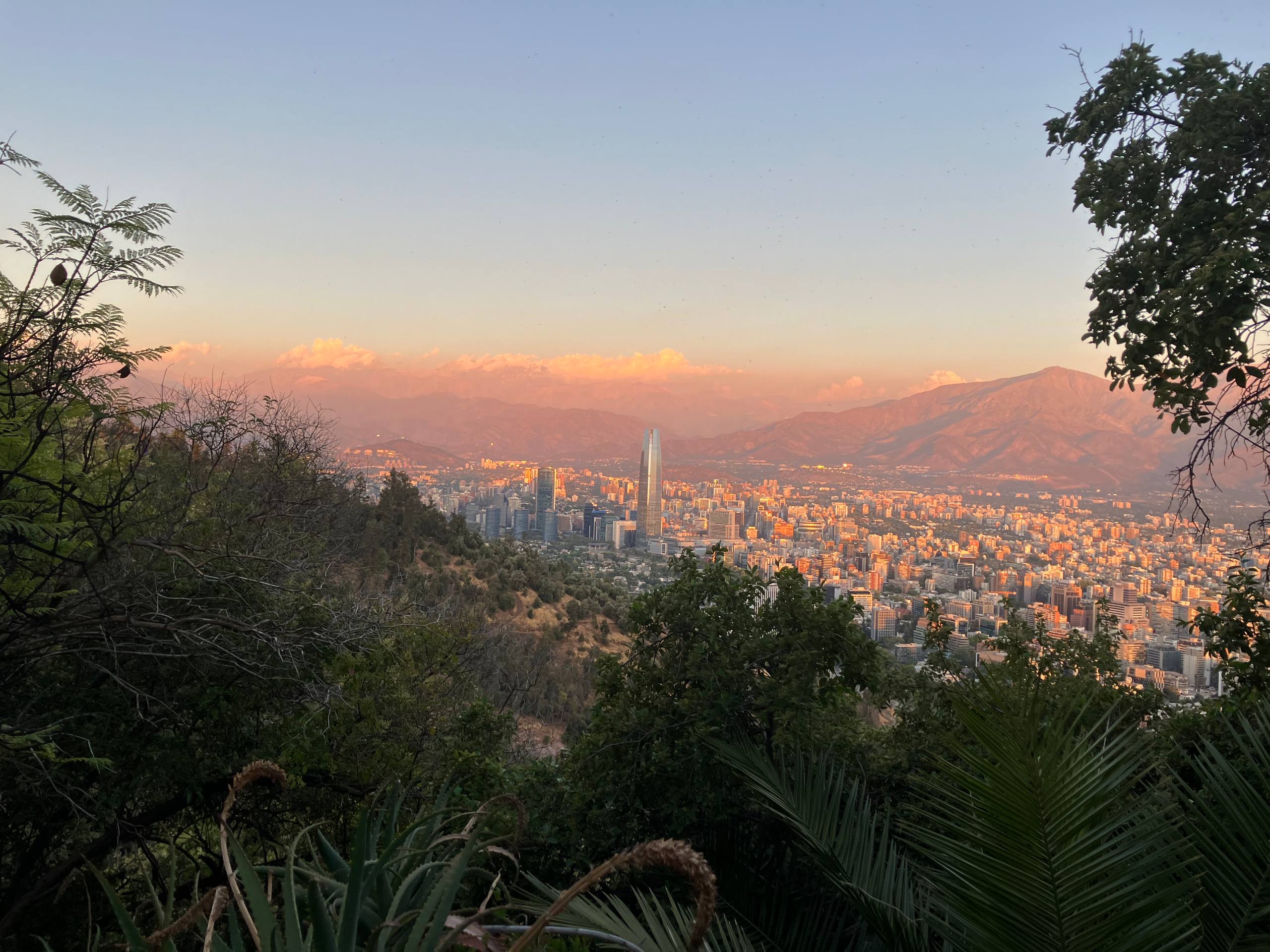
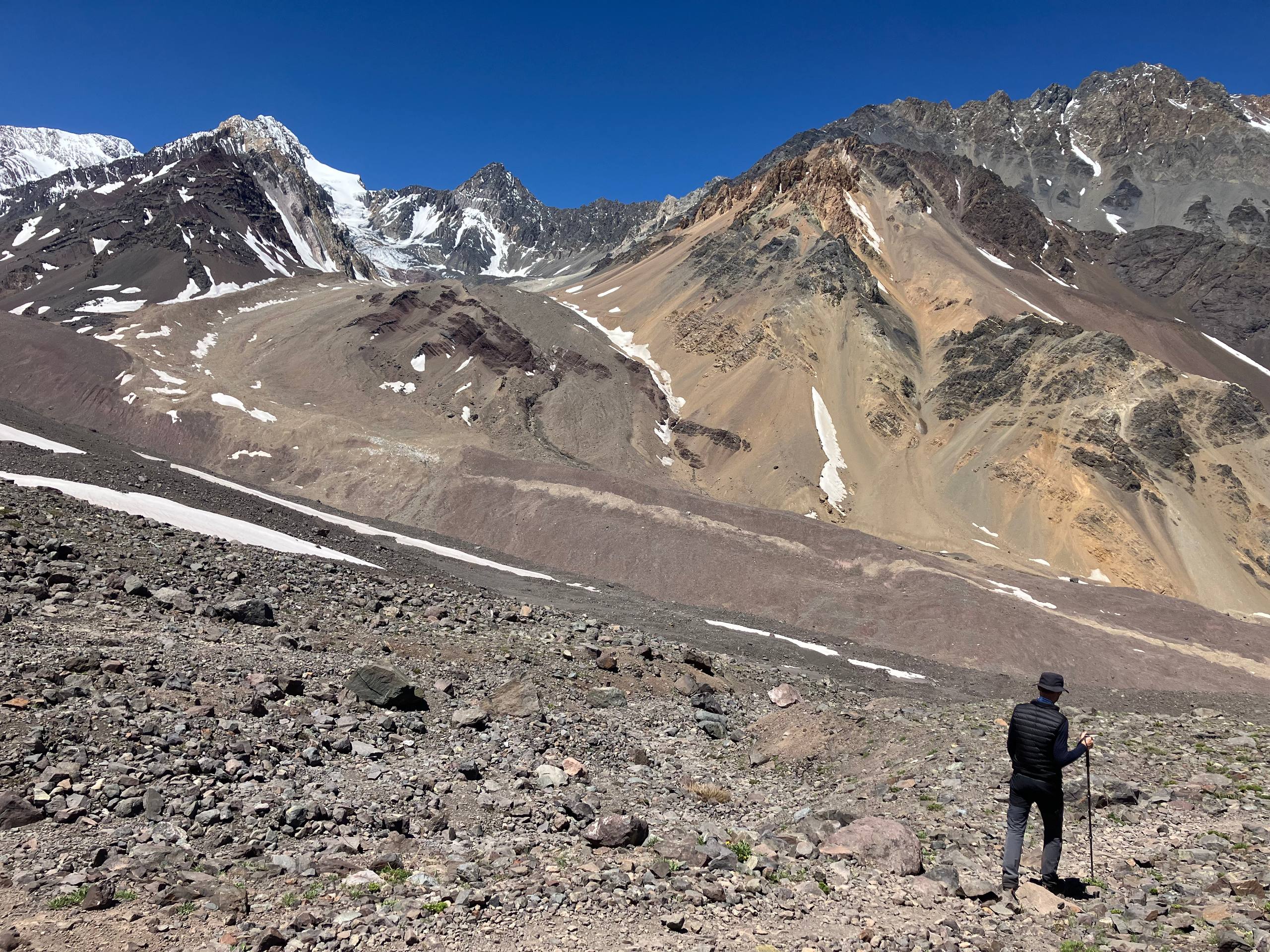
Sands and crags of every dark hue imaginable unfurled before us. To the south stretched a ridge with a winding trail, dotted with a couple of crawling, dark silhouettes. From the ridge, a rolling slope cascaded—shifting in ribbons of orange, white, and green—down into a canyon, flanked on its far side by sheer, kilometer-deep drops. The green ribbon bore a deep wound: the sand abruptly morphed into an uneven, mangled canvas of Hades-like rock left in the wake of a retreated glacier. To the west, the view opened up toward the Santiago valley, where the city of seven million, our temporary home, hid within the haze some four kilometers beneath us. To the north, though already partially veiled by a cloud, Cerro Eleanor surged upward as a sheer wall of ice, stone, and snow, hurtling toward the heavens. Its dark ridges soared—unfettered by gravity or sky—in the shape of a stretched horseshoe, climbing higher and higher until they vanished into the clouds, leaving between them only a glacier that, fracturing into waves over the years, slowly poured downward before disappearing behind a desolate, Martian-red pass. To the east hung a heavy cloud. Beneath it, like jagged teeth, grey rock plummeted sharply from under our feet. Its plunge was caught by a rolling slope that time and again gave way to vertical walls, fleeing endlessly downward into the abyss. Beyond the cloud and a chain of six-kilometer stratovolcanoes and glacier-sharpened pyramidal peaks, lay Argentina. The great Andes had revealed themselves to us, welcoming us into their ranks.
When my father suggested we meet up in Chile—he had gone there to fly—I was entirely incapable of taking the idea seriously, nor did I really try. Since childhood, I had read about the llamas and condors inhabiting the mountains of distant South America. The Andes felt exactly as real to me as Victorian London, with the llamas and condors merely occupying the adjacent book or the next channel over from Sherlock Holmes and Doctor Watson. “Of course I want to meet Sherlock, Dad. Yeah, let’s figure out the details after my exams.”
Poring over trails on maps and reading mountaineering guides, I might as well have been tracking Sherlock’s pursuit of the murderers from The Sign of the Four across streets that haven’t existed for a century. The creosote that Toby the hound once sniffed out had long been washed away by tens of thousands of rains, and the remnants of the cobblestones from that stained pavement had been scattered across landfills and construction sites worldwide. When I packed my rucksack that evening, contemplating what was worth bringing along, I tossed items inside out of pure formality. These trekking poles, headlamps, masks, and jackets belonged to my world—I had frozen and cried, sweated and laughed in them once before. They were not ripped from the pages of Watson’s diary.
I wandered through a snowy Montreal—I had a few hours to kill between flights. Amidst the intensifying snowfall, I navigated between subway lines, the museum of fine arts, and a couple of streets I had mentally bookmarked last autumn. The Impressionists, Quebecois modernism, the bleakness and the haughtiness of the Francophones—all of this was mine. I rode the bus back to the airport through a blizzard, texting my friends about our plans for my return. Watching airplanes touch down on the runway, leaving trails in the impenetrable white soup, I read about the history of Chile—about the Conquistadors searching for “the next Peru,” about Allende challenging a deeply fractured society, about Pinochet losing his dictatorial grip in an election—with the exact same intrigue and absorption as The Secret History by Donna Tartt, which I had devoured on the flight. And then, the first glimmer of dawn began to trace the contours of the peaks in the windows.
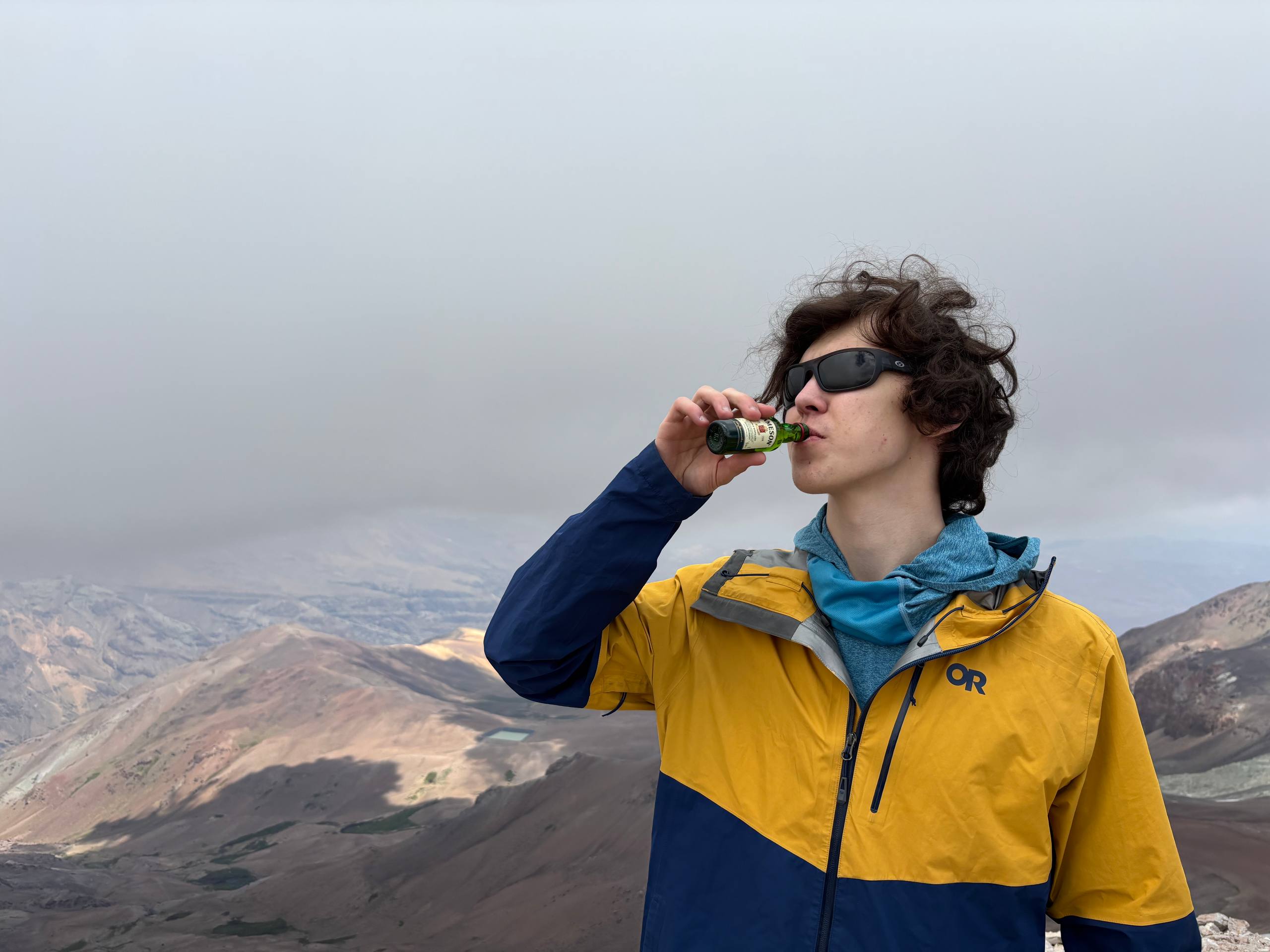
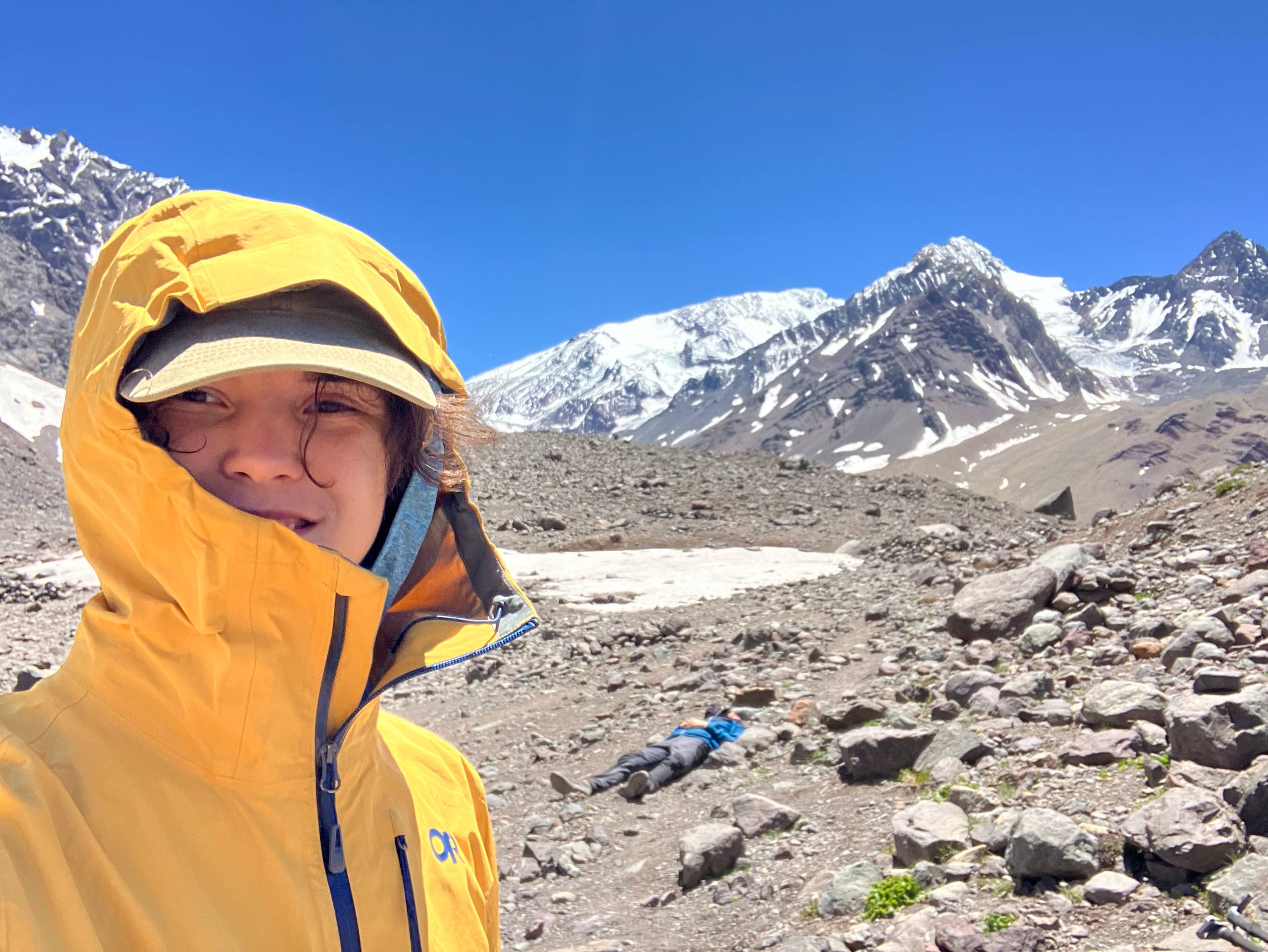
Below are some of the selected photographs from the adventure.